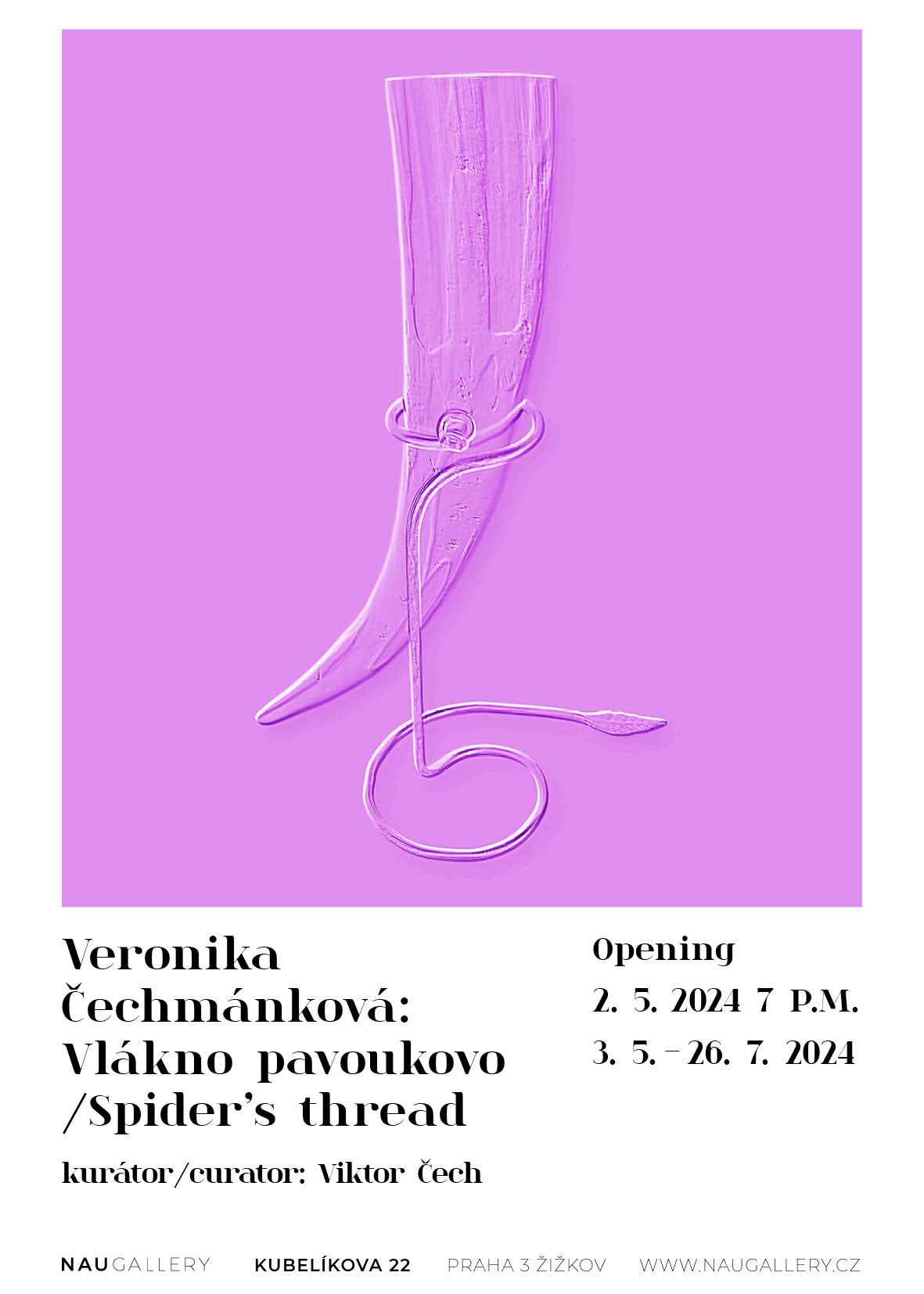
NAU Gallery, Kubelíkova 22, Prague
May 3 – July 26 2024
curator: Viktor Čech
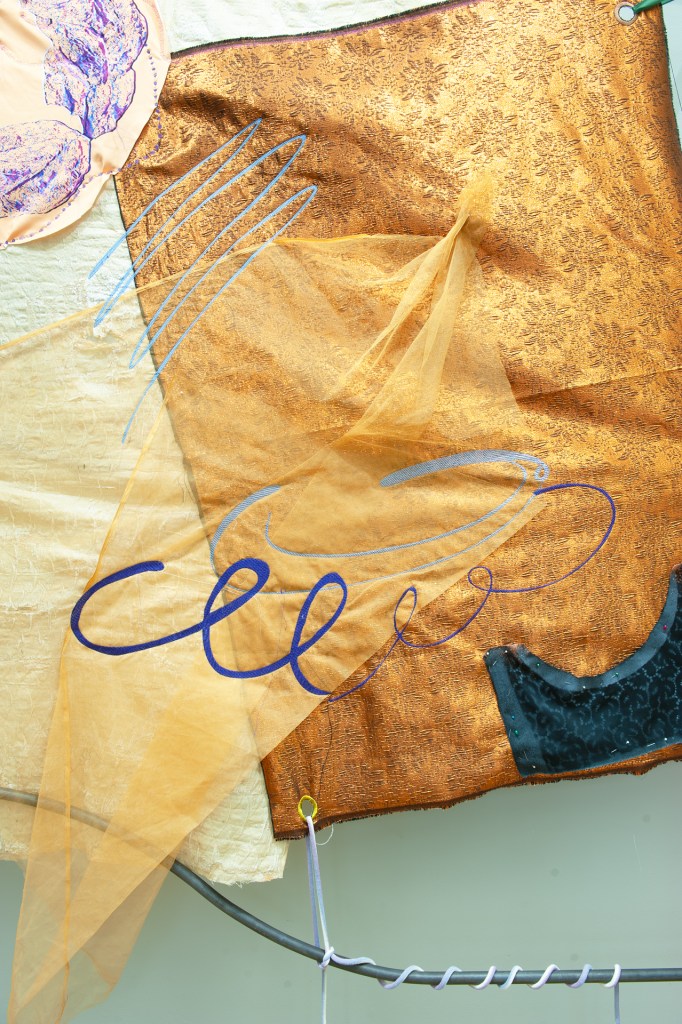
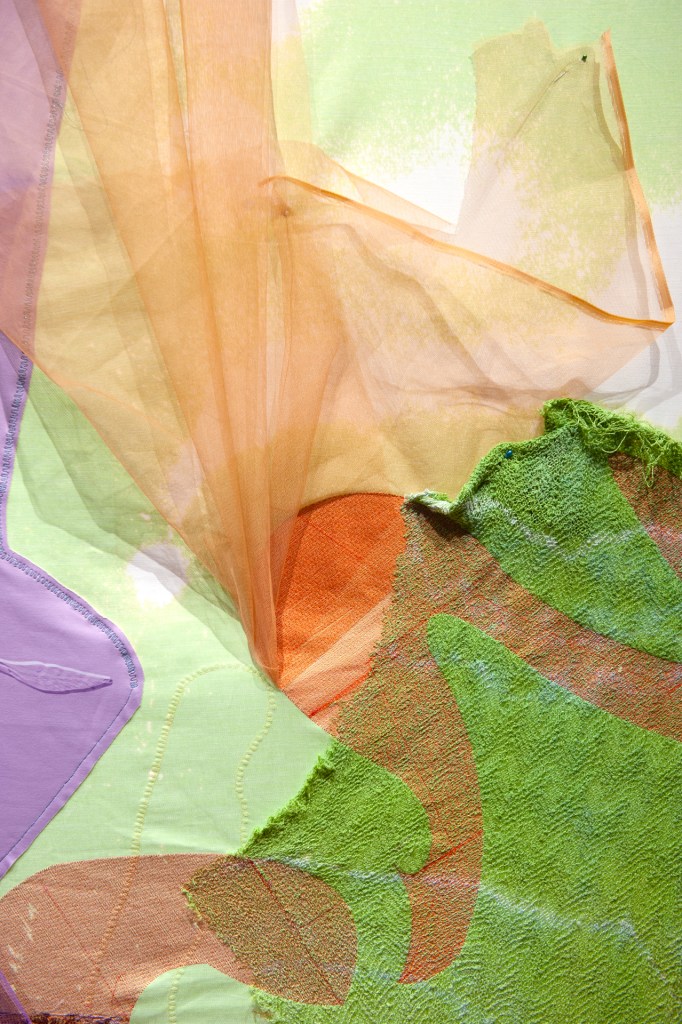
A spider weaves its web like a trap. Veronika Čechmánková’s textile images actually depict traps too, drawing on our memories, associations and shared archetypes that stem from the traditional role of textiles in our society. Through stitching, embroidery, printing and weaving, she layers the webs of memory.
Arachne is guilty of her pride. Something that is one of the greatest sins in the eyes of the gods of Greek mythology. Not only did she provoke the goddess Athena into a carpet-weaving contest, but she depicted scenes in hers that were in blatant rebellion against the cruel passion of the gods who chose human women as the targets of their desire. Indeed, these tales of the supreme Zeus and several other deities are the cause of most of the tragic stories of Hellenic mythology.
Just as the three goddesses of fate, the Moirais, unwind, and ultimately cut, the thread of each individual’s destiny, Arachne weaves hers into her carpet. Her transformation into a spider was actually an act of grace. Cruelty and pity simply go hand in hand in the decisions of Greek anthropomorphic deities.
The carpets that Arachne and Athena wove in their competition were at the same time images filled with mythological scenes that add another symbolic layer to their dispute. On the one hand a celebration of the gods and their gracious power over humanity, on the other a critique of their capriciousness and cruelty. Especially in Ovid’s rendering, this ancient story thus acquires a broader existential dimension, where these woven images become the carriers of a political message of the conflict between the powerful and the powerless, between order and malice.
Fabric and its ornamental shaping, whether by weaving or printing, structure or texture, has carried with it for many millennia the cultural memory, the language of symbols and the aesthetic vision of the world of many human communities and epochs. The ornament or motif is something that has been carried through history as a constantly mutating form, acquiring new stylistic roles with each new interpretation of the motif. In its shape, form or color, it can carry with it various symbolic messages, traces of perception of the world and its order, as well as mere playful examination of its beauty.
For the Czech environment, in a country once so famous for its textile production, which at its peak was able to cover the ornamental needs of not only European but also many more exotic customers, for example African, each of these fabrics is also part of the history, both general and very private, associated with their wearers, their taste, sensibility and physicality. Whether we perceive textiles as part of today’s mass-produced material culture or as a folkloric heritage of densely synthesized cultures of the past, very often the one associated with our bodies in particular takes on a highly personal dimension. It combines the role of pure functionality with that of an instrument of identity, fetish and social ritual.
In Veronika Čechmánková’s textile paintings, the pieces of fabric used are also traces of reinterpreted memory. Clothes that were worn by our grandmothers and great-grandmothers and sometimes even their male counterparts. The patterns of textiles, which were defined both by folk tradition and local mass production, fulfilled folkloric requirements even during the 20th century. Many of us can recall a garment associated with someone close to us in our childhood. Its pattern, haptic structure and smell. Fabric is often not only our outer skin and at the same time a visually eloquent surface, but also the bearer of a range of sensory stimuli, physical proximity, intimacy and desire.
The main source of inspiration for Veronika Čechmánková is her family’s rural and folklore memory. She has used this experience in various ways in her previous projects, whether her inspiration was the tradition of home baking or the annual manual village work such as scything.
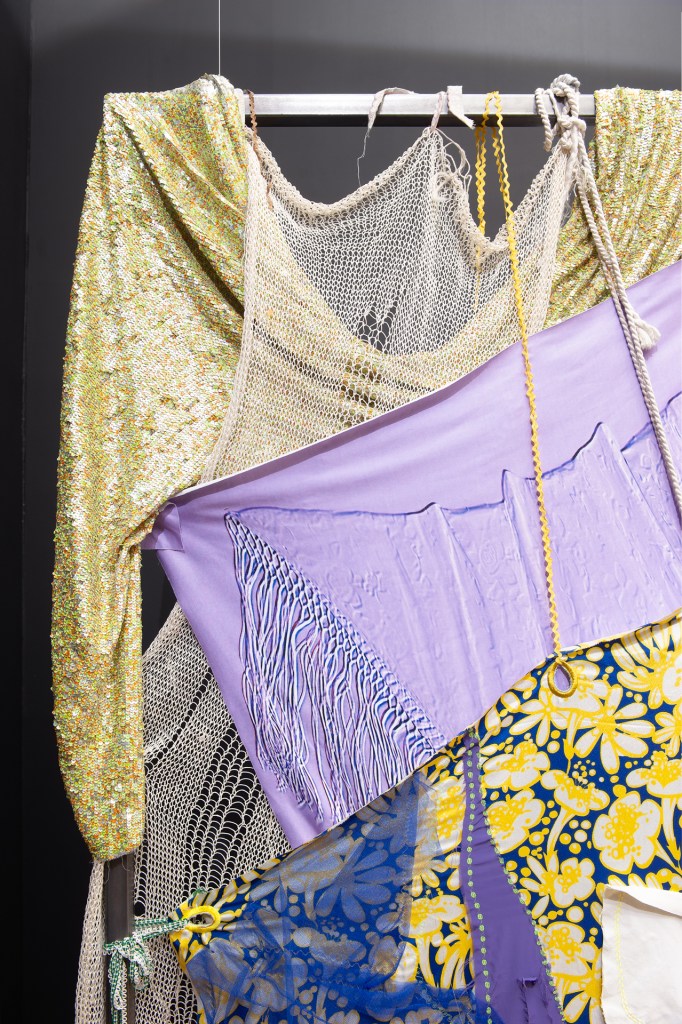
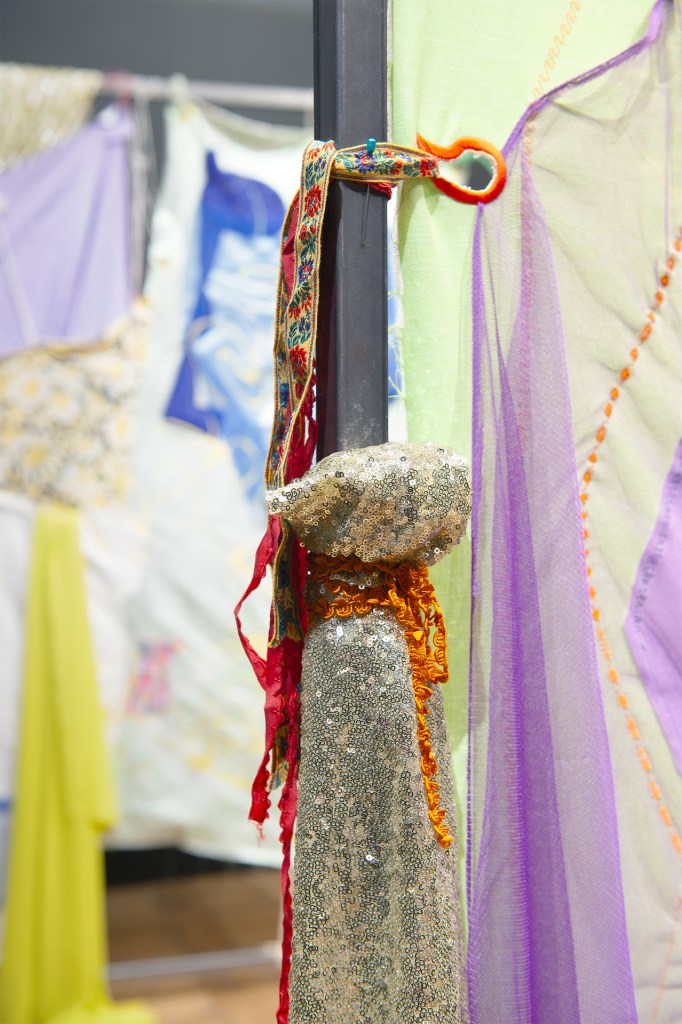
These moments also appear in these new works as visual references to archetypal traditions of rural life. The almost prehistoric-looking scythe quiver made of cow horn was in fact commonly used until recently. Bread knitted into a wreath or a typical folk scarf with rich fringes. These are the motifs around which the composition of each of the textile paintings is layered.
For the artist, folklore and traditions are not an escape from the complexity of the contemporary world into the non-existent order of an idealized past, but a reconstitution of the positive values based on them as an open form for contemporary life.
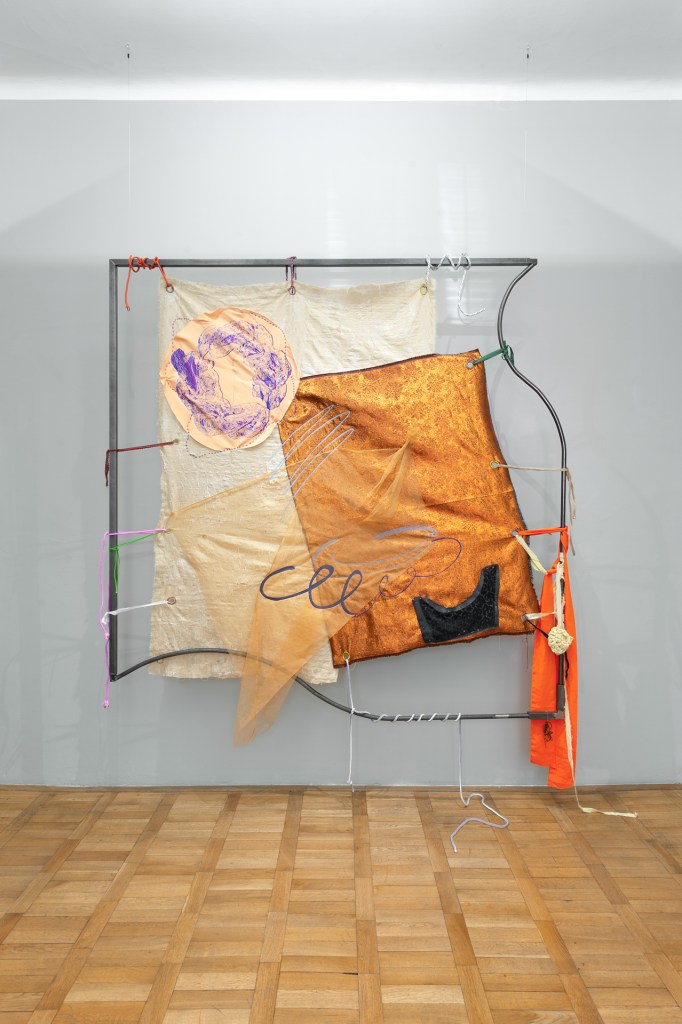
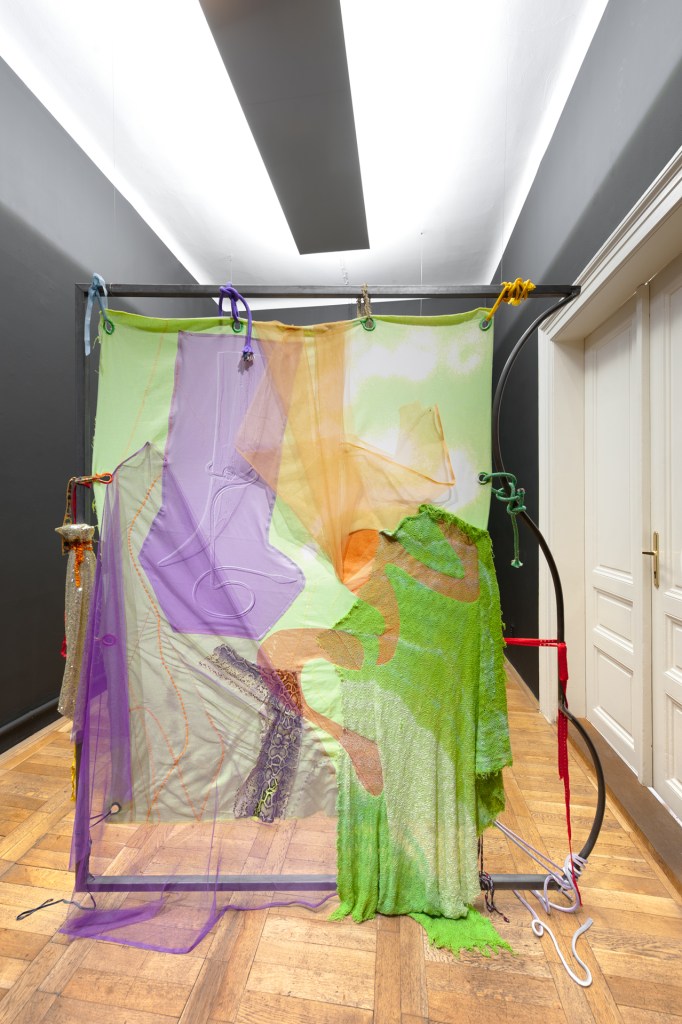
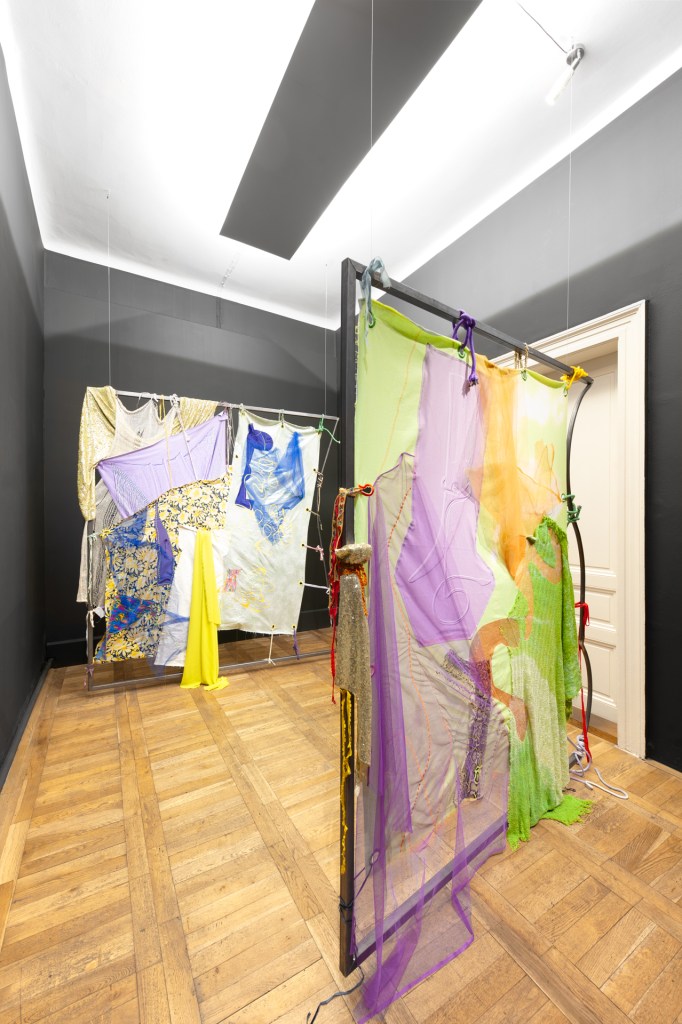
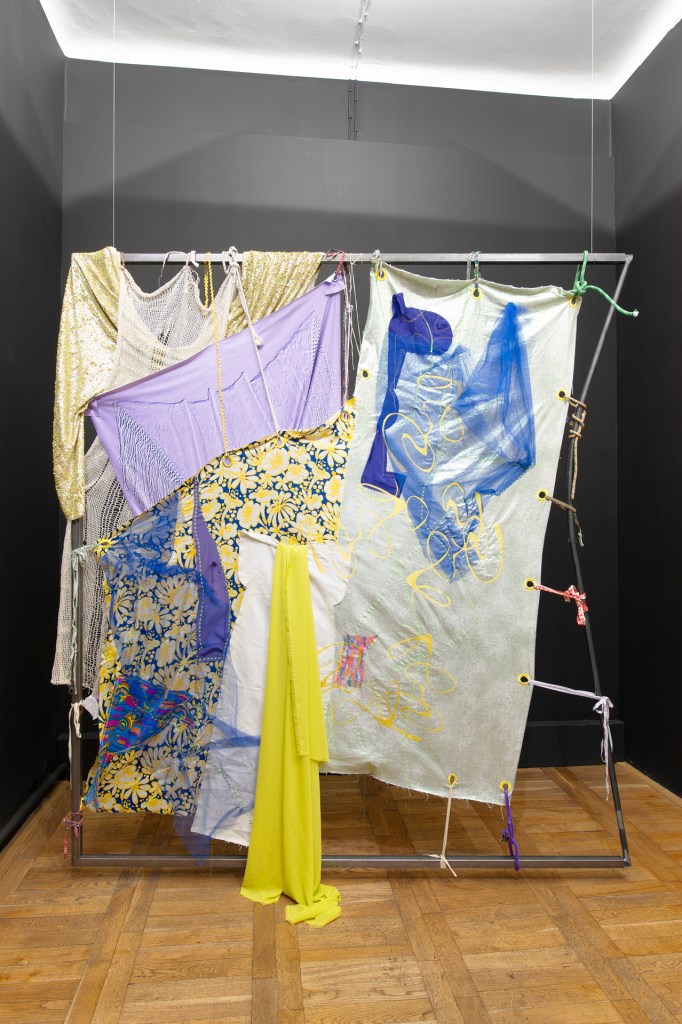
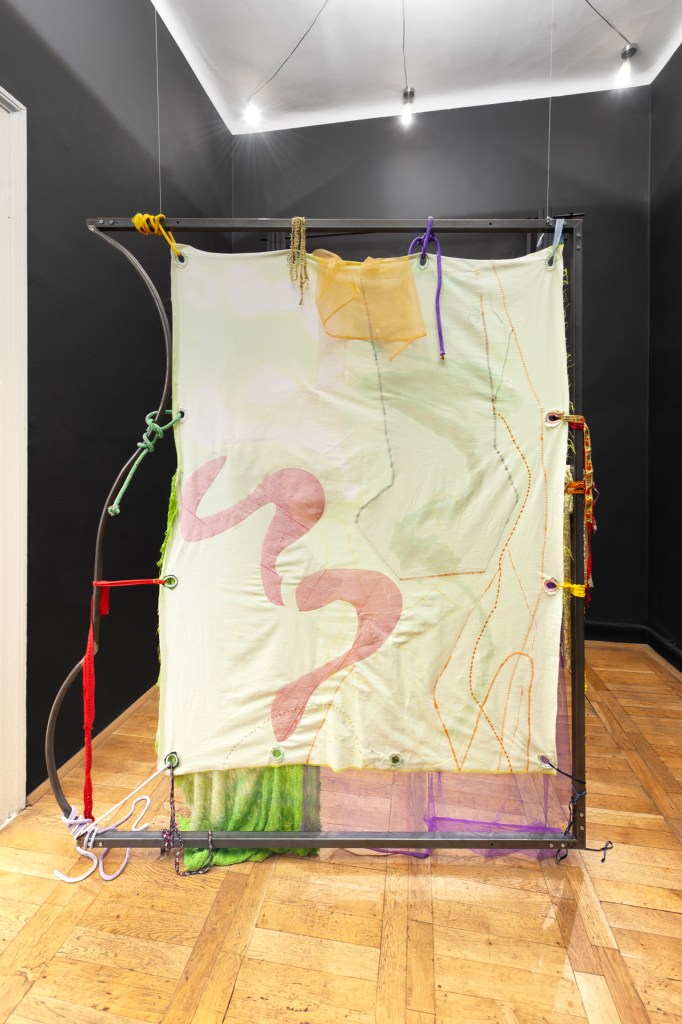
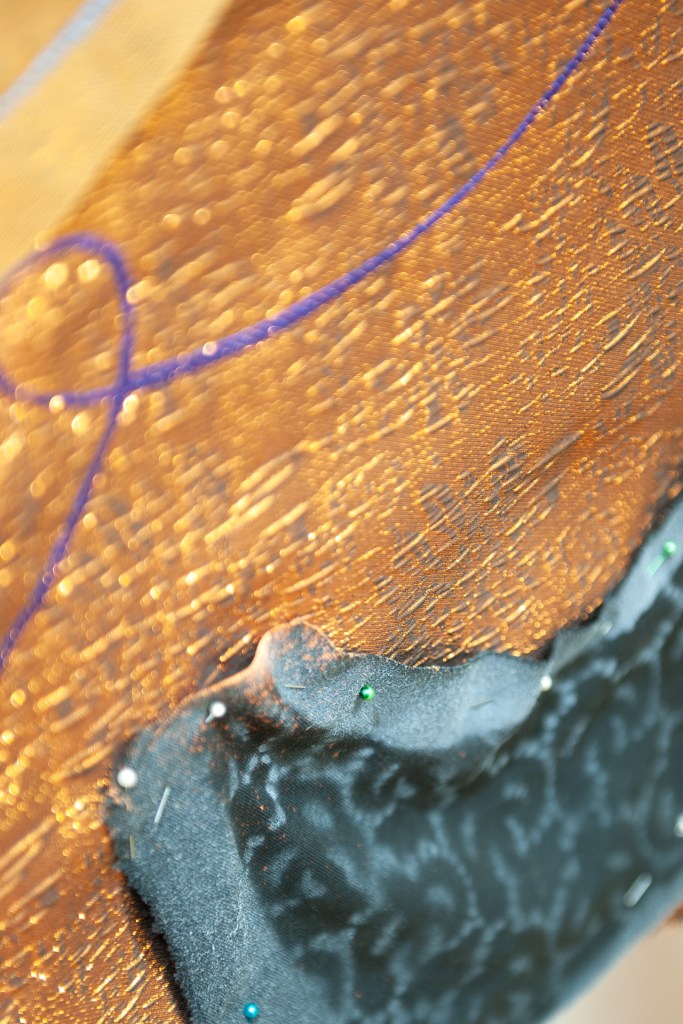
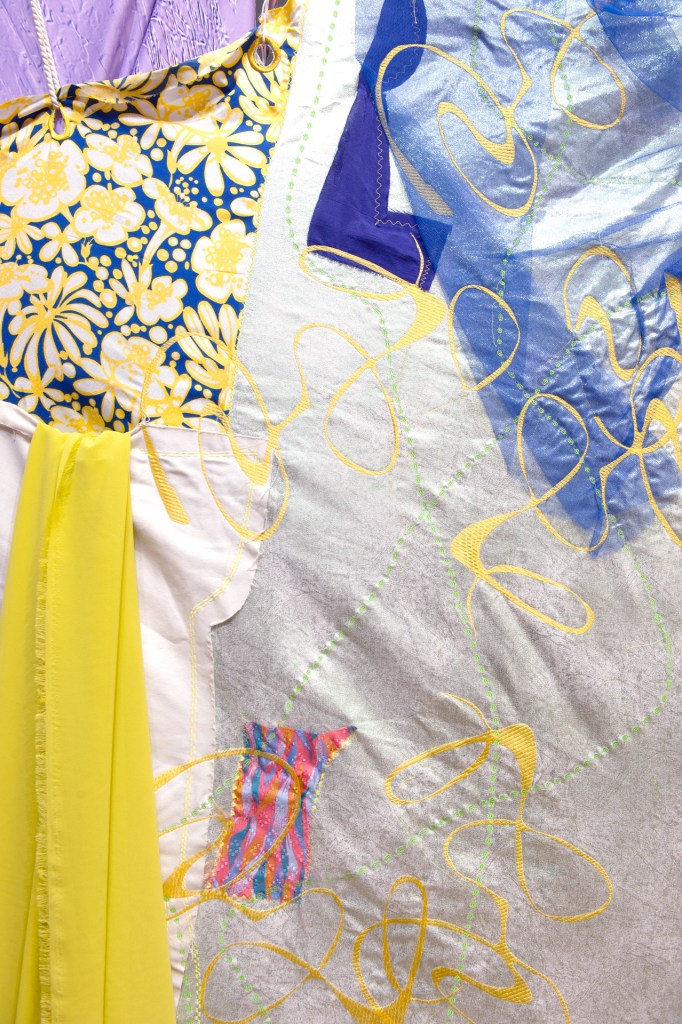
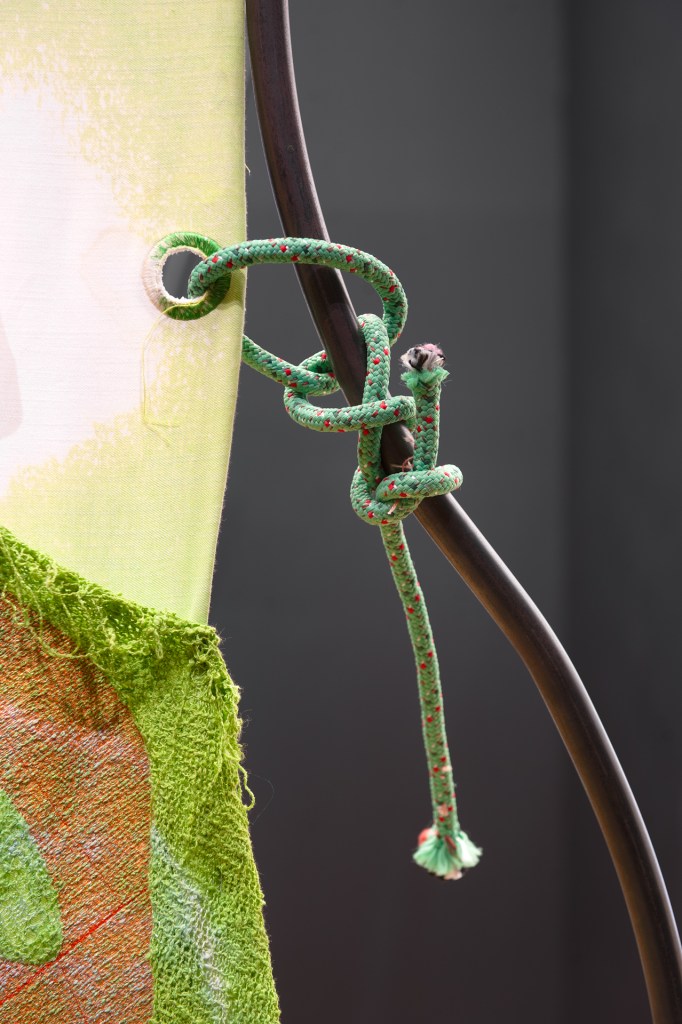
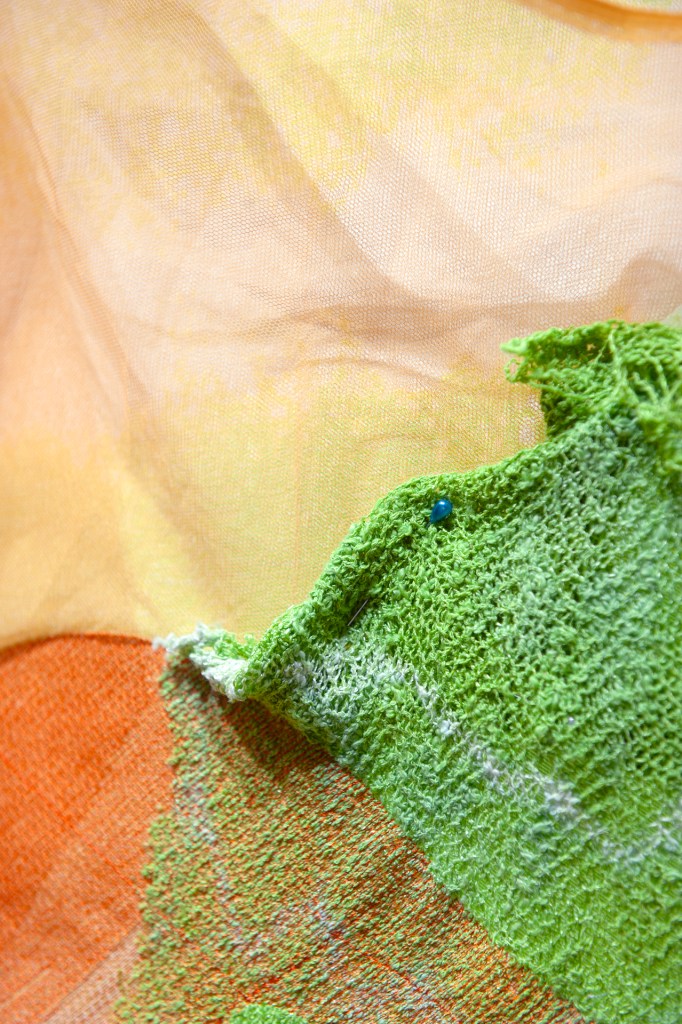
The paintings are composed in the context of metal frames, on which the artist stretches individual textiles and shapes them with artistic expression in the form of embroidery and digital printing. They are created by layering, intersecting and interconnecting these elements. In contrast to today’s mass production, where you can buy the same piece of clothing in Singapore, Prague and New York, each of these pieces carries its own history, whether it concerns its production or the memory of its owners. The seemingly highly decorative form of these works is thus at the same time an intimate dialogue between each of the fragments of memory used with the artist’s delicate fingers and the frame into which she inserts them like a nimble seamstress.
The textile, not only in its role as clothing, but also in its many other applications, is in a sense also a language, albeit on a very low semantic level. However, this rational and conscious role is often taken to unexpected ends by its other properties, whether the aforementioned smells and scents and other sensual stimuli such as the softness, coarseness or slipperiness of the material, its rustling, weight or lightness. That which for the traditional understanding of painting means an imaginary pictorial space is here replaced by a depth of interpenetrating material and symbolic stimuli that irresistibly compel us not only to perceive but also to touch, feel and become aware of the very specific role that textiles have played in our culture for millennia.
Viktor Čech
Veronika Čechmánková (born 1996) is a photographer and intermedia artist. She focuses mainly on the transformation of symbols and traditions in time and their new meanings for the present. She studied photography and new media at FAMU, Academy of Performing Arts in Prague and her work has been shown in galleries, institutions such as the Centre for Contemporary Art FUTURA, Karlín Studios in Prague, and the BF Artist Film Festival in London. During her studies she participated in Studio Vortex residencies in Arles and Joya: AiR Asociación de Arte y Ecología, Artist Residency, Vélez-Blanco, Casa Lu in Mexico City. She is currently working at FAMU in Prague as an assistant to the head of the department and assistant to Rudy Prekopa’s Imaginative Photography Studio. She was nominated by the Fotograf Gallery under the Future Photography platform in Amsterdam.
*The author would like to thank Thea Chatrná for her help, patience and assistance with her textile images.
Veronika Čechmánková / Vlákno pavoukovo
kurátor: Viktor Čech
Pavouk splétá svou pavučinu jako past. Veronika Čechmánková svými textilními obrazy pasti vlastně líčí také a to na naše vzpomínky, asociace a sdílené archetypy, které pramení v tradiční roli textilu v naší společnosti. Sešíváním, výšivkou, potiskem i splétáním vrství pavučiny paměti.
Arachné se provinila svou pýchou. Něčím co je v očích bohů řecké mytologie jedním z největších hříchů. Nejenže vyprovokovala bohyni Athénu k soutěži v tkaní koberce, ale ještě na tom svém znázornila výjevy, jež byly zjevnou vzpourou proti kruté vášni bohů, kteří si lidské ženy vybrali za cíle své touhy. Ostatně tyto příběhy nejvyššího Dia i několika dalších božstev jsou příčinou většiny tragických příběhů helénské mytologie.
Podobně jako tři bohyně osudu Moiry rozvíjejí a nakonec ustřihnou niť osudu každého jedince i Arachné si ve svém koberci utkala ten svůj . Její proměna v pavouka byla vlastně projevem milosti. Krutost a lítost jde prostě v rozhodnutí řeckých antropomorfních božstev ruku v ruce.
Koberce, které při svém soutěžení Arachné i Athéna utkaly byly současně obrazy, naplněné mytologickými výjevy, jež do jejich sporu dodávají další symbolickou vrstvu. Na jedné straně oslava bohů a jejich milostivé moci na lidstvem, na straně druhé kritika jejich rozmarů a krutosti. Především v Ovidiově podání tak tento antický příběh získává i širší existencionální rozměr, kde se ony tkané obrazy stávají nositeli politického poselství sporu mezi mocnými a bezmocnými, mezi řádem a zlovůlí.
Tkanina a její ornamentální utváření, ať již tkaním či potiskem, strukturou či texturou, sebou již po dlouhá tisíciletí nese kulturní paměť, řeč symbolů i estetické vidění světa řady lidských společenství i epoch. Ornament či motiv jsou něčím co se nese dějinami jako neustále mutující forma, která své nové stylové role získává s každou novou interpretací daného motivu. Může si sebou ve svém tvaru, podobě či barevnosti nést různorodá symbolická poselství, stopy vnímání světa a jeho řádu i pouhé hravé ohledávání jeho krás.
Pro české prostředí, v zemi kdysi tak proslulé svou textilní výrobou, která za svého vrcholu dokázala pokrýt ornamentální potřeby nejen evropských, ale rovněž řady exotičtějších zákazníků, například afrických, je každá z takových látek i součástí historie, ať již obecné, tak i té velmi soukromé spojené s jejich nositelkami, jejich vkusem, citem a tělesností. Ať již vnímáme textil jako součást dnešní masově produkované hmotné kultury, nebo jako folklórní dědictví hustě syntetizovaných kultur minulosti, velmi často získává především ten spojený s našimi těly silně osobní rozměr. Spojuje v sobě roli čisté funkčnosti s nástrojem identity, fetiše i společenských rituálů.
V textilních obrazech Veroniky Čechmánkové jsou použité kousky také stopami reinterpretované paměti. Látek které nosily naše babičky a prababičky a někdy i jejich mužští protějšci. Vzory textilií, které byly definovány jak lidovou tradicí, tak lokální velkovýrobou, naplňovaly folklórní požadavky ještě v průběhu 20. století. Leckdo z nás si vzpomene na oděv spojený s někým nám blízkým v našem dětství. Jeho vzor, haptickou strukturu i vůni. Látka je často nejen naší vnější kůží a současně vizuálně výřečným povrchem, ale také nositelem řady smyslových podnětů, tělesné blízkosti, intimity i touhy.
Pro Veroniku Čechmánkovou je hlavním zdrojem inspirace především venkovská a folklórní paměť její rodiny. Tyto své zkušenosti již dříve různorodými způsoby využila ve svých předchozích projektech, ať již byla její inspirací tradice domácího pečení, či každoroční rukodělná vesnická práce, jako bylo sečení kosou.
I v těchto nových dílech se tyto momenty objevují v podobě vizuálních odkazů na archetypální tradice venkovského života. Až pravěce působící, ale ve skutečnosti ještě nedávno běžně používaný toulec na brousek kosy z kravského rohu. Chléb upletený do podoby věnce nebo typický lidový šátek s bohatými třásněmi. To jsou motivy kolem nichž se vrství kompozice každého z textilních obrazů. Folklór a tradice pro autorku nejsou únikem před složitostí současného světa do neexistujícího řádu idealizované minulosti, ale rekonstituováním z nich vycházejících pozitivních hodnot jakožto otevřené formy pro současný život.
Obrazy jsou komponované v kontextu kovových rámů na něž autorka napíná jednotlivé textilie a utváří je výtvarným vyjádřením formou výšivky i digitálního potisku. Jsou tvořené vrstvením, průniky i vzájemným propojováním těchto prvků. Oproti dnešní masové produkci, kde si stejný kus oblečení můžete koupit v Singapuru, Praze i New Yorku, je každý z těchto dílců nositelem své vlastní historie, ať již se týká jeho produkce či paměti jeho vlastníků. Zdánlivě velmi dekorativní forma těchto děl je tak současně intimním dialogem každého z použitých fragmentů paměti s citlivými prsty umělkyně a rámcem do nějž je jako hbitá švadlena vkládá.
Textil je nejen ve své roli oblečení, ale i v řadě dalších svých aplikací, v určitém smyslu rovněž jazykem, byť na velmi nízké sémantické rovině. Tuto jeho racionální a vědomou roli však často do nečekaných končin odvrací jeho další vlastnosti, ať již zmíněné pachy a vůně a další senzuální podněty jako je jemnost, hrubost či kluzkost materiálu, jeho šustění, váha či lehkost. To co pro tradiční chápání malby znamená imaginární obrazový prostor je zde nahrazeno hloubkou navzájem se pronikajících materiálových a symbolických podnětů, které nás neodolatelně nutí nejen k vnímání, ale i k dotyku, pocitu a uvědomění si velmi specifické role, kterou v naší kultuře již po tisíciletí textilie hrají.
Viktor Čech
Veronika Čechmánková (*1996) je fotografka a intermediální umělkyně. Zaměřuje se především na transformaci symbolů a tradic v čase a jejich nových významů pro současnost. Vystudovala ateliér fotografie a nových medií na FAMU, Akademii múzických umění v Praze a její tvorba bylo k vidění v galeriích, institucích jako jsou Centrum současného umění FUTURA, Karlín Studios v Praze, nebo v BF Artist Filmový festival v Londýně. Během studií se zúčastnila rezidenčních pobytů Studio Vortex v Arles a Joya: AiR Asociación de Arte y Ecología, Artist Residency, Vélez-Blanco, Casa Lu v Mexiku City. V současnosti působí na pražské FAMU jako asistentka vedení katedry a asistentka ateliéru imaginativní fotografie Rudy Prekopy. Byla nominována Galerií Fotograf pod platformu Future Photography v Amsterdamu.
 ART HAS NO HISTORY
You must be logged in to post a comment.