
A few remarks on the interdisciplinary dynamics of the interwar avant-garde and its influence on contemporary art
Contribution to the symposium Art History as an (Intellectual) Adventure, dedicated to the late Prof. Vojtěch Lahoda, held on October 21 and 22, 2025, in Prague.
Abstract
The mutual interdisciplinary overlaps between the fields of visual arts and dance in the interwar period from the 1910s to the 1930s have become a popular topic of interest for many researchers and curators in recent decades. Among many others, it suffices to mention, alongside the pioneering RoseLee Goldberg, Jacques Rancière and Emma Lavigne. Their methodological approach to the work in question offers a range of possible strategies – from Goldberg’s search for the roots of the specific medium of performance, through Rancière’s synthetic view of the aesthetic situation of the time, to Lavigne’s dynamic exploration of interdisciplinary relationships. But they have one thing in common. They disrupt the classic disciplinary boundaries of art research and point to the need for a different perspective on this era, which in many ways predetermined the subsequent development of intermedia art up to the present day.
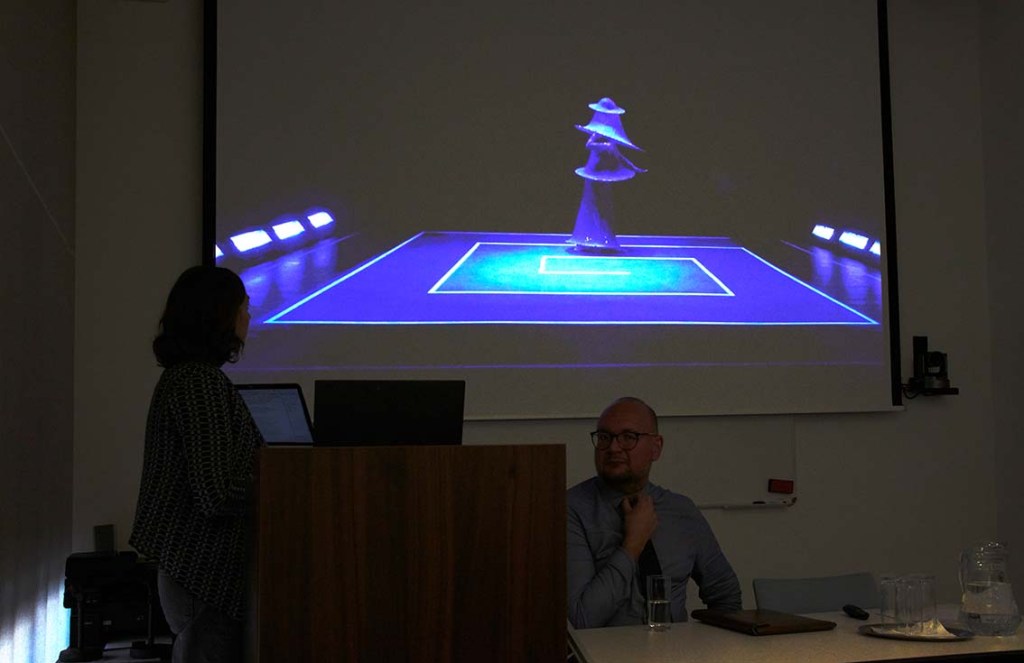
At the same time, however, the aforementioned production has also become a stimulating source of inspiration and interpretation in the work of a number of contemporary artists who, in their returns to and updates of what is now seemingly codified avant-garde, are finding new potential. Works such as Schlemmer’s Triadic Ballet, the visual and choreographic forms of Rudolf Laban, but also the iconic work of the Czech interwar avant-garde, The Alphabet by Milča Mayerová, Vítězslav Nezval, and Karel Teige, have entered into direct dialogue with current issues in contemporary art (e.g., Haegue Yang, Kelly Nipper, Paulina Olowska, or even the collaboration between Czech artists Vladimír Houdek and Hana Turečková).
My contribution aims to highlight the potential and contradictions of the research approaches outlined, as well as the question of the possibility of art history in which the possible anachronism of the perspective of contemporary art on the still-living potential of the art of the past also plays a role.


 ART HAS NO HISTORY
You must be logged in to post a comment.